
Blog – Choosing Landing Site In An Emergency 11/05/2024
Todays flight was all about choosing a landing site in an emergency.
Choice of landing site
The choice of the most appropriate landing site is usually a compromise and is discussed using the mnemonic, the ‘seven Ss, C and E’.
The seven Ss are: size, shape, slope, surface, surrounds, stock and sun. The C is communication and E is for elevation.
Size
The ideal size is for the longest possible landing area into wind within gliding distance (to be discussed further in the ‘considerations’ lesson).
Shape
Shape is mentioned because the student may limit their search for a landing site to only those sites that resemble a runway. In fact, the perfect shape is a circle, as multiple approach paths into wind are available. Even a square is preferable in contrast to a narrow paddock with only one approach path (see Figure 2).
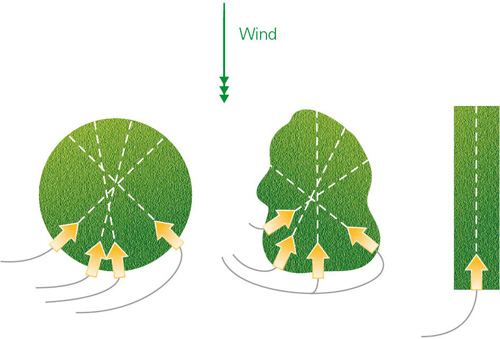
Figure 2 Consider all shapes of landing sites
Slope
An uphill slope for landing is preferred over level ground. A down slope should be avoided – it would take a very strong wind to override the disadvantages of a downhill landing. Slope can be difficult to detect at altitude, and when slope is apparent from altitude, generally the terrain is very steep. Water runs downhill, and a dam wall on farm water storage ponds can also indicate downhill slope. Significant ‘white water’ in any flow indicates significant gradient.
Surface
A firm surface is recommended, not so much for stopping distance, but to avoid the nosewheel digging into the soft surface and somersaulting the aeroplane. Determining the type of surface from altitude can be done by comparing the texture of the local aerodrome’s grassed areas with those of various paddocks.
Surface also includes anything on the surface, such as: stock; crops; fences; stumps; rabbit holes; soft or wet patches; undulations; etc.
Surrounds
Where possible, a landing site that has a clear field on the approach and the upwind end should be chosen to provide for undershoot and overrun during the forced landing. For the training exercise, a clear go-around and climb-out path is also considered.
An approach over a road will quite likely bring you into close proximity with power wires running along the road.
Sun
Sun is normally only a problem at sunrise and sunset, particularly in winter. Under these conditions an approach in the direction of the sun may blind the pilot on final. Accepting some crosswind may be better than an approach directly into a low sun.
Communication
All of the previous factors are the priority, but if there is a choice available to land near habitation, especially where there is little of it, it will put you closer to help. For example, if you are over a ridge and to one side is a remote area and the other has habitation – choose the habitation.
Elevation
Based on local knowledge, charts, or comparing the altimeter reading with terrain perspective, the height above sea level of the landing site needs to be estimated. This is because the procedure is planned on heights above ground level but flown on heights above sea level with reference to the altimeter.
The pilot should be able to recognise heights without the use of the altimeter. For example, the circuit height is generally 1000 feet – have the student fix that as a metal picture they can use during this exercise. Do the same for 500 feet and 1500 feet.
For more information see “Forced Landings Without Power”
After a near perfect take-off and climb out (my FI’s words) we departed to the training area to put this into practice.
Today I seemed to have more insight into a good landing site, and managed to pick out 1500ft Aera and 1000ft areas quickly and without difficulty, then flying to the 1500ft area to arrive at the correct distance from the landing site and at the correct height.
After several successful rotations of this, we set track for the airfield, tracking to set up for an overhead join.
I usually land on 06, but today the wind was from the south so I should have flown over the 24 threshold , descend to 1000ft agl, turn left onto 06 into wind, cross 06 threshold, and join downwind for 24. I did the first three, then extended way into wind before turning around too cross upwind. Wrong, wrong, wrong! You always cross at 1000ft agl at the threshold so that you are at a safe hight for any possible aircraft taking off.
After I gave myself a virtual upper-cut, I managed a correct downwind join and landed ok.
Another good solid practice for Forced Landings Without Power. Its one of those necessary skills you must master, but hope to never have to use.
I was knackered but happy overall.
Happy Days!
Until next time…..
For more Blogs and Digital Photos go to https://walshephotography.com
Check out Wairarapa Aero Club at https://www.wairarapaaeroclub.co.nz/